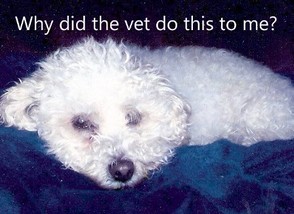
Sometimes dogs and cats must undergo vocal cord surgery to treat a physical ailment causing medical harm, such as cancer. But when performed for the sole purpose of suppressing the animal’s voice—called devocalization—this practice is widely considered an act of cruelty. Devocalization is illegal throughout the UK and in most of Europe. In 2010, Massachusetts banned it too. There is good reason why:
Devocalization subjects animals to pain and stress along with serious risks, from blood loss and infection to horrific death from choking, aspiration pneumonia or heat stroke. Helpless to refuse this unnecessary surgery, they receive no benefit, not even the assurance of a secure home. Devocalized dogs and cats are given to shelters and rescue groups or are convenience euthanized for the same reasons as any other animal--or because the cost of treating complications of devocalization is prohibitive.
Some devocalized animals are sold without disclosure. Unsuspecting pet owners who buy them may face a devastating choice they did not anticipate: euthanasia of a beloved pet or a substantial financial burden. Life-saving surgery to remove scar tissue that forms over the airway after devocalization can cost $2,000 or more, and may need to be repeated.
Is devocalization the same as debarking or bark softening? “Debarking” doesn’t accurately describe this surgery, which alters all vocalization, not just barking. Some animals are left silent. It is also done to cats—who don’t bark!—though less often than dogs. “Bark softening” is spin, a meaningless term invented to sanitize an act of cruelty.
What does a devocalized animal sound like? Devocalized voices are typically described as “disturbing.” These animals may sound:
Vocal distinctions that communicate different meanings are removed or diminished.
Devocalized animals may cough and/or gag persistently.
Who would have an animal devocalized and why?
Breeders, when they or neighbors don't want to hear their many animals, or to hide an illegal breeding operation
Show dog exhibitors, to keep dogs quiet in transit between shows or in the ring
Sled dog racers, because huskies are a “barky" breed, and dogs in a pack tend to vocalize more
Those who hoard or "collect" animals or who fight dogs, to hide their activities
Occasionally, uninformed or selfish pet owners, because this dangerous surgery is easier for them than responsible selection, care, training and housing of animals
How is devocalization done? Vocal cord tissue is cut using one of two methods: through a surgical incision in the neck or by inserting instruments through the mouth. The veterinarian may use a scalpel, scissors, biopsy tools or laser. The result is the same: Soft tissue is cut, subjecting animals to surgical risks and potential complications that may compromise them for life or result in a terrible death.
What are the risks of devocalization? All devocalization procedures have potential complications that may cause an animal to suffer for life or die horribly, including airway obstruction, laryngeal paralysis and tracheal and/or laryngeal collapse.
Alldevocalization procedures carry serious surgical risks, such as blood loss, infection and adverse reaction to anesthesia.
The risk of infection isgreaterfor devocalization than other types of surgery due to the large number of bacteria in the oral cavity and throat.
The potential for internal scarring is actually greater with the less-invasive method, in which vocal cords are accessed through the mouth. What is the danger of scarring in the throat? Any amount of scar tissue, no matter how minor, can cause a permanent narrowing in the opening of the devocalized animal’s airway that may not be evident until long after the procedure. When this occurs, the animal may:
Struggle to breathe, particularly during exercise or in warm weather
Choke on food and even water
Cough and/or gag persistently
Die from choking, aspiration pneumonia or heat stroke
Be at greater risk during future veterinary procedures requiring anesthesia
Require one or more reparative surgeries, with additional pain, risks—and significant expense, typically $2,000 or more
Does the veterinarian’s skill or the instrument used remove risks? No. Surgical risks and potential complications, such as airway obstruction, are present regardless of the vet’s skill and experience or the instrument used (scalpel, scissors, biopsy tools or laser).
What about “notching” the vocal cords through the oral cavity? Is that safe? There is no safe way to devocalize an animal. Scarring is a normal part of healing no matter how little tissue is cut and whether the devocalization is done through the oral cavity or an incision in the neck. Even a small amount of scar tissue can be deadly when it forms in the throat.
What about spay/neuter? Isn’t it invasive? That’s a hollow argument made by those who profit from devocalization. Veterinarians and shelter executives have testified that devocalization subjects animals to serious risks but no benefit, not even a secure home. In contrast:
Spay/neuter benefits animals by reducing the risk of certain cancers.
Spay/neuter benefits society by reducing pet overpopulation, which burdens municipal resources--funded by taxpayers--and nonprofit animal shelters.
Spay/neuter reduces excessive vocalization triggered by hormonally driven excitement or aggression.
Is recovery from devocalization surgery painful? Although most animals are anesthetized during the procedure, anyone who has undergone surgery in the throat (or suffered strep!) can attest: Recovery is very painful. People can manage their own pain with medication or other palliative measures. However, animals rely on the goodwill and responsibility of their owners; not all dogs and cats receive proper post-operative care or pain relief.
Are cats really devocalized? And why? Though the incidence is far less than canine devocalization, feline devocalization has been documented by those who have adopted these unfortunate cats and by veterinarians, including preeminent behaviorist Dr. Nicholas Dodman (author, The Cat Who Cried for Help). As with dogs, some cats, such as Siamese, vocalize persistently or have unusual voices. And because the collective voices of any breed are louder than one or two, those who keep many cats may devocalize when they don’t want to hear their animals or to hide activities like hoarding or an illegal breeding operation.
Does devocalization keep animals out of shelters? Shelter executives say devocalized animals are given up for the same reasons as any other dog or cat, such as when they’re not useful for breeding or show, or an owner moves, has financial difficulties or simply doesn't want their pet any longer. Some animals land in shelters or are convenience euthanized when an owner is unable or unwilling to pay for costly surgery needed to remove post-devocalization scar tissue from the animal's airway.
Is devocalization important for good relationships with neighbors? Just the opposite; devocalization can be harmful to the community as well as the animal. It's never a good idea to breed animals in residential neighborhoods. And while devocalization is quick and easy for the owner--whether a breeder or not--it's the harder work of responsible selection, care, training and supervision of animals that ensures harmony among neighbors.
Even devocalized animals may soil sidewalks, dart into traffic, dig up the neighbor’s prize tulip garden. Devocalized animals also may bite the frail elder next door or a child in the park when muffled attempts to bark don’t get attention.
There are no convenience surgeries to prevent or manage these problems, which are more irksome and dangerous than barking or meowing. Responsible stewardship of breeding animals and pets does.
It is not responsible to breed animals, or to keep a very vocal breed like Sheltie dogs or Siamese cats, where barking or meowing will not be tolerated. It is not responsible to leave a dog alone for sustained periods of time, in an apartment or outside, to bark his frustration and boredom. It is inhumane to compensate for irresponsibility by having an animal's vocal cords cut.
How many devocalized animals are there? Sadly, many more than you think. Rescue organizations have documented receiving unwanted devocalized animals, and veterinarians have reported treating or euthanizing them for complications. However, this dirty little secret can’t be quantified. That's because those who have animals devocalized, along with vets who perform it for them, rarely disclose it. They know that surgically stifling an animal's voice for its own sake is considered shameful, and rightly so. And it's easy to hide: Unlike tails and ears that have been docked or cropped for “breed aesthetics," vocal cords are not visible. Most people assume the dog or cat they hear rasping, wheezing, coughing and gagging has laryngitis or kennel cough.
Few imagine the cruel reality: The animal’s vocal cords were cut just to stifle his voice.
Veterinary information reviewed by the Humane Society Veterinary Medical Association
Copyright 2012, Coalition to Protect and Rescue Pets. All Rights Reserved.